Monday, April 8, 2019

Traditional Literature- The Ugly Duckling

The Ugly Duckling
Written by Hans Christian Anderson and Illustrated by Jerry Pinkney
Harper Collins, 1999
Traditional Literature

      There are some children's books that will never get old, and this book is one of them. "The Ugly Duckling" is a classic tale about the runt duckling in a family. This little duckling stands out from the rest of his siblings. Why is that? Well, he looks a whole lot different than his siblings. His fur is different and he is smaller than the rest of them. This duckling faces many challenges, but the biggest challenge he faces is himself. Check this book out to see if the duckling can overcome his low confidence and strengthen his self-confidence.
      The illustrations in this book are very classic and give the book so much character. The colors yellow and green are used throughout the book. Also, the majority of the illustrations take place near water or woods. The timeless illustrations are done with watercolor and give the characters very realistic traits. The duckling and his siblings are pictured throughout the story, and the duckling is in every illustration. The illustrator does a great job of detail on the difference in appearance between the duckling and his sibling.
     I would use this book in a first grade classroom. The students could read the book on their own and then talk about reason's why it is important to embrace diversity. This classic piece of literature is a great way to teach students about differences in culture and appearance. It is a great way to teach your students empathy, kindness, and acceptance. This would also be good guided reading practice for the first grade students. There are great vocabulary words for first graders to learn and apply. 
     I highly encourage you to keep this piece of traditional literature in your classroom library!
Image result for the ugly duckling pinkney illustrations

Sunday, April 7, 2019

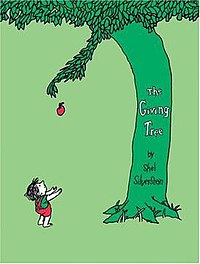
Poetry- The Giving Tree

The Giving Tree
Written and Illustrated by Shel Silverstein
Harper & Row, 1964
Poetry

      This classic book is about a little boy that has a very close relationship with a tree. He visits the tree every day and eats the apples from the tree. He would climb the tree and swing from the tree's branches. As the boy grew older, he began to take even more away from the tree. Check this book out to see what happens at the end of the story. Throughout this book, Shel Silverstein implements many different aspects of poetry. This free verse poem allows the author to express and explain the boys life through various ways. As the boy develops, his relationship with the tree changes. Silverstein uses free verse poetry to tell this story.
      The illustrations in this book are very simple. Every picture is in black and white and done with pen and ink. In every illustration, the giving tree is pictured. As the years pass by in the story, the tree begins to look different. After the boy takes from the tree, the tree changes. Also, the boy changes as he gets older. The boy and the tree are drawn throughout the story. These drawings would be great to use in the classroom to talk about prediction. The students could try to predict what was going to happen next by evaluating the illustrations. 
      I would use this book in a first grade classroom for an English lesson. The students could work on predictions and cause and effect. They could discuss the effects that the boy has on the tree because of everything that he takes from it. The students could also find the causes of some of the things that happen to the boy and the tree. The students could also make predictions by discussing the illustrations. Overall, this is a great book to read to your students because of the meaning and purpose behind it. This is a great way to introduce poetry to your students. 
Check out The Giving Tree to read to your students!
Image result for the giving tree illustrations

Wednesday, March 20, 2019

Contemporary Realistic Fiction Book Blog

Holes
Written by Louis Sachar
Farrar, Straus and Giroux, 1998
Realistic Fiction

     This book is about a teenage boy named Stanley Yelnats that gets into a little trouble. This trouble causes him to get sent to juvenile detention center for boys. Stanley believes that his family is cursed and that he is bound for trouble. Throughout his time at the detention center, Stanley learns so many life lessons and information about his family's past. He meets many people along the way that challenge, mentor, and help him out. Check this book out to see if Stanley Yelnats could break his family's curse and get out of the juvenile detention center. 
      This book is a chapter book and does not have any illustrations. The front cover of the book has an illustration has a picture of holes and shovels in the dirt. This symbolizes the hard work that Stanley has to do at the juvenile detention center. For their punishment, Stanley and his friends have to dig holes in the middle of the desert. The cover of the book foreshadows some of the events that our going to happen in the story. This chapter book is a great book to engage students in discussion, predictions, and inferences. 
      I would use this book for a 5th grade class in reading. I would allow the class to read this book in small groups, book, clubs, and whole group. I would encourage the students to discuss what it is happening in the book to work on collaboration and comprehension. I would also use this book to incorporate a writing lesson. The students could create an alternate ending to the story, a "Wanted" ad for the characters from Stanley's family past, or a summarizing piece on the story. This would help the students practice using details from the story to support their writing. 
     This is a great book to engage student's in reading, writing, and collaborating. Check this book out to use in your classroom one day!
Image result for the book holes illustrations

Sunday, March 17, 2019

Historical Fiction Book Blog- Henry's Freedom Box

Henry's Freedom Box: A True Story From the Underground Railroad
Written by Ellen Levine and Illustrated by Kadir Nelson
Scholastic Press, 2007
Historical Fiction
     Reading a historical fiction text is a great way to introduce historical events to your students. This book is a great way to teach your students about slavery and the Underground Railroad. The book tells the true story of a slave named Henry Brown. It tells the story of his life and his battle with slavery. Henry was traded to a different slave owner when he was only a little boy. Throughout his life, Henry faced many obstacles and hardships in his path to freedom. Go check this book out to see if Henry ever reaches his dream of being free.
     The illustrations in this book are absolutely breath-taking. The illustrator did such a great job of making the pictures look realistic. The pictures evoke a sense of emotion in the reader because they portray everything the story is trying to tell. The pictures include many muted colors and take place in many different settings from Henry's life. These pictures portray the characters emotions and the realness of the hardships that slavery put people through. The majority of the colors are brown, black, white, and dark green. 
     I would use this book for a history lesson for fifth grade students. I would read this book to the students to introduce them to the topic of slavery and the Underground Railroad. The students could do research on Henry Brown and present their findings to the class. I don't want to spoil to much of the story for you, but the students could create an escape route to help Henry reach the Underground Railroad. You could also do a cross-curricula activity and allow them to write about Henry Brown and his connection to slavery. The students could write as if they were in Henry's shoes and explain how they were going to try to find freedom.
    This book can be used in so many ways in your classroom. Ultimately, it is a great book for your students to read to teach them about slavery. As always, I encourage you to read this book to your students and keep it in your classroom library.
Image result for summary of henry's freedom box


Monday, March 11, 2019

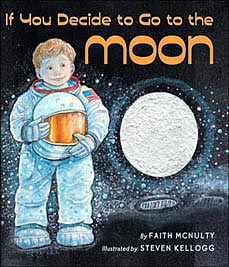
Science Fiction Book Blog- If You Decide to Go to the Moon

If You Decide to Go to the Moon
Written by Faith McNulty and Illustrated by Steven Kellogg
Scholastic Press, 2005
Science Fiction

     Have you ever thought about what you would do if you ever got to go to the moon? This fun and exciting children's book almost serves as a guide for students to get to the moon. Also, the book gives examples of all of the things you can do once you make it to the moon. This book teaches kids how to prepare for their trip to the moon, and most importantly, how to make it back home. This lightheart story is such a fun way to engage student's in learning, especially about space travel. Do you want to know how to prepare to go to the moon, or even what to do once you get there? Go check out "If You Decide to Go to the Moon" and you will see how to all from a kid's perspective.
     The illustrations in this children's book are incredible. The artist used lots of watercolor and pastels for the drawings. Many of the pictures on earth have bright and vibrant colors. The pictures in space have more dark and muted colors. The pictures themselves tell another story, and it is very obvious that the author and illustrator worked together to create symbolism behind the pictures. Most of the illustration stake place on Earth, the moon, or the rocket to get to the moon. The illustrations capture the reader's eye with its' constant variation of shapes and colors. 
     I would use this book in a second grade classroom for a science lesson. I would allow the students to read this book and then let them research ways to actually get to the moon. They could learn all about space travel and America's firs space travel from this children's book. This book is a great way to incorporate reading into science, but also a fun way to stir creativity within the students. The students could learn about astronauts that have gone to the moon and what they actually did once they got there. You could even tie in a compare and contrast component for students to do with the book and real life. Overall, your students will love reading this book about space travel. This is such a fun book for you to read to your students during a science lesson.

As always, go check this book out! 

Modern Fantasy Book Blog- Flotsam

Flotsam
Written and Illustrated by David Wiesner
Clarion Books : Houghton Mifflin Company, 2006
Modern Fantasy

     Have you ever read a book that had no words? If you had to re-read that question again then you might be thinking exactly the same thing that I was when I heard of this book. I knew there were picture books that had very little words in it, but I did not know that there were books for older students that had nothing but illustrations. In "Flotsam", a young boy finds an underwater camera while on a beach trip with his family. He asks around to see if anyone knows where this mysterious camera appeared from, but no one was claiming it. Intrigued by this mystery camera, he takes the film from the inside of the camera to be developed. Little does he know the journey that these pictures are about to take him on. Check this book out to see what new and unknown places these pictures transport the young boy too.
      The illustrations in this book are incredible because they tell the whole story. There is so much detail poured into these pictures with many muted colors and many different drawing devices. Many of the illustrations are boxed in with lines. Also, there are many drawings that look very realistic. Each picture is symbolic to the story and is important because it tells the story. The setting in these illustrations mainly take place on the beach or in the ocean. However, they also take place in the mysterious realms that  the pictures transport the young boy to. 
      I would use this book in a fourth grade classroom for a reading unit. You could teach about the deeper meaning behind illustrations and how sometimes you don't need any words to tell a story. This book would challenge student's to think critically and creatively. After reading the story, they could create their own story using nothing but illustrations. This would be a great way to incorporate art standards into a reading lesson. I would also suggest talking with your students as they read through the book. Get them to explain what they think is happening in each picture. Overall, this book would be a great way to challenge your students and introduce them to new forms of literature.

I highly encourage you to go check this book out!